Explore San Jose
Downtown San Jose Architecture Walking Tour: Old and New
A downtown San Jose architecture walking tour gives you a clear mix of 1920s detail, civic history, and modern design. You can do it at your own pace, stop for photos, and keep the focus on public exteriors instead of trying to rush between landmarks.
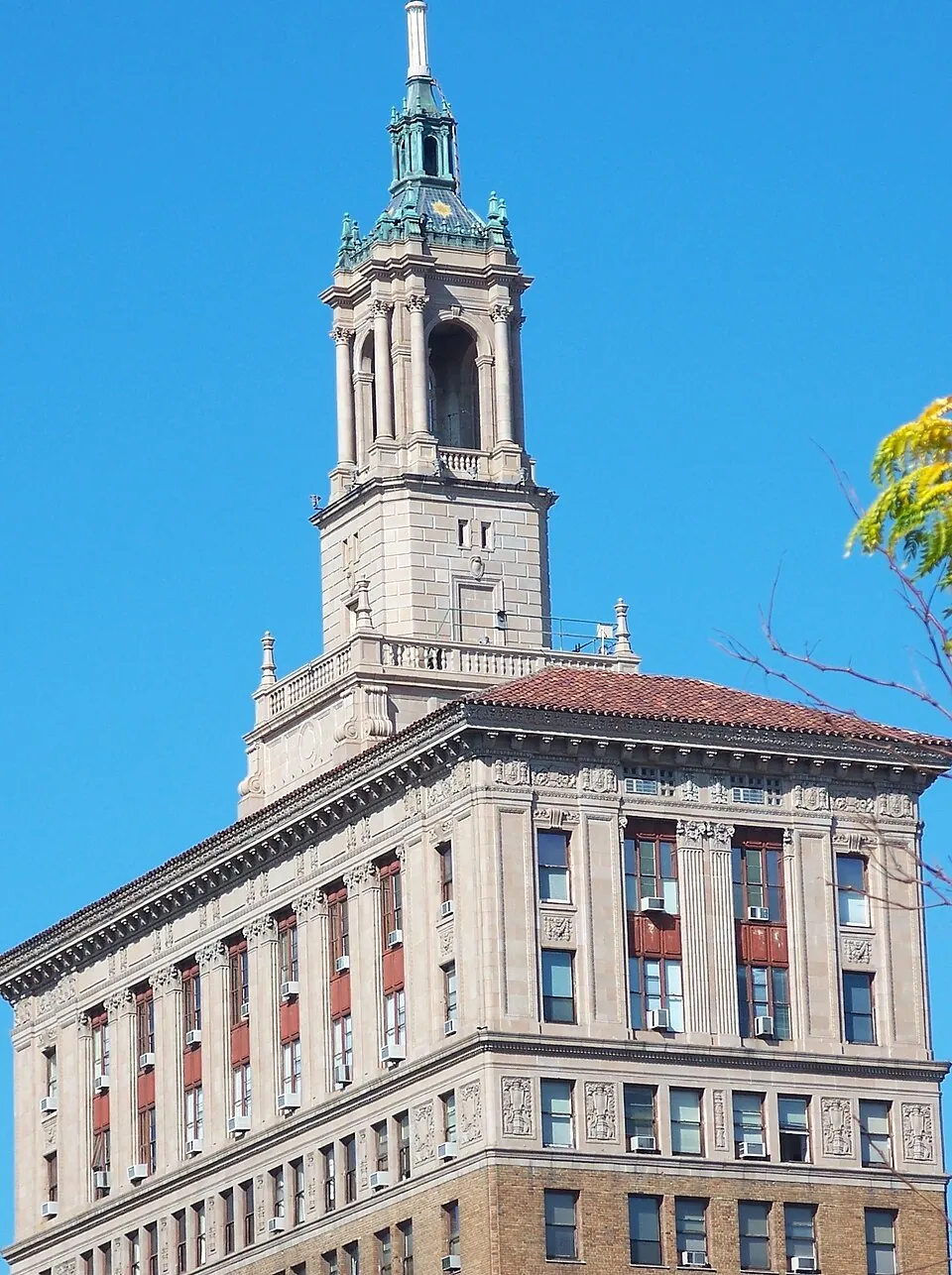
Start at First and Santa Clara, then follow a self-guided downtown San Jose architecture walking tour past the Bank of Italy Building, the Cathedral Basilica, California Theatre, and City Hall. It’s best for exterior viewing, with a flexible route and optional detours rather than a fixed measured loop.
Walking tour overview and starting point
This downtown San Jose architecture walking tour works best as a self-guided, public-exterior route. Begin at First and Santa Clara, where you can orient yourself before heading toward the older core of downtown and then back east to the civic center area.
Think of it as a flexible walk, not a measured loop. You can follow the order that makes sense for you: start near the Bank of Italy Building at 12 South First Street, then continue by the Cathedral Basilica of St. Joseph at 80 South Market, the California Theatre at 345 South First, and finish at San Jose City Hall at 200 East Santa Clara.
That sequence gives you a strong snapshot of San Jose architecture without needing interior access. Some buildings may have current conversion work or sidewalk restrictions, so follow posted routes and treat the walk as a planning guide rather than a fixed course.
Bank of Italy Building and 1920s downtown
The Bank of Italy Building is one of the key stops for anyone interested in San Jose historic buildings and early-20th-century downtown growth. It stands at 12 South First Street, was completed in 1926, and was designed by Henry A. Minton.
This is the building to picture when you think about the city’s 1920s commercial core. It has 14 floors and gives the route a clear historic anchor before the walk moves toward later civic and performance landmarks.
Keep this downtown tower distinct from the recreated Bank of Italy branch at History Park. They are different visitor destinations. For this walk, stay with the exterior at South First and Santa Clara streets; do not rely on entering a private building or a construction area to see the architectural details.
Other historic facades and civic landmarks
From the Bank of Italy Building, the next visual contrast comes from the Cathedral Basilica of St. Joseph. Built in 1877 on the site of earlier churches that were damaged by earthquakes or fire, it’s a California Historical Landmark with majesty that comes from its domes and stained glass rather than height alone.
The cathedral at 80 South Market Street is especially worth a pause if you want a classic downtown streetscape photo. It has 39 stained glass windows and gives the walk a different mood from the commercial tower at the start.
A few blocks away, the California Theatre shows how downtown San Jose combines restored historic architecture with active use. The building at 345 South First Street first opened in 1927 as a movie palace designed by Weeks and Day, and its current life as a performance venue preserves ornate plasterwork and chandeliers.
If you want to turn the walk into an evening outing, this is the natural place to pair architecture with a show. You can browse theatre performances or concert dates if you want a way to choose a performance without assuming anything will still be available.
San Jose City Hall modern design
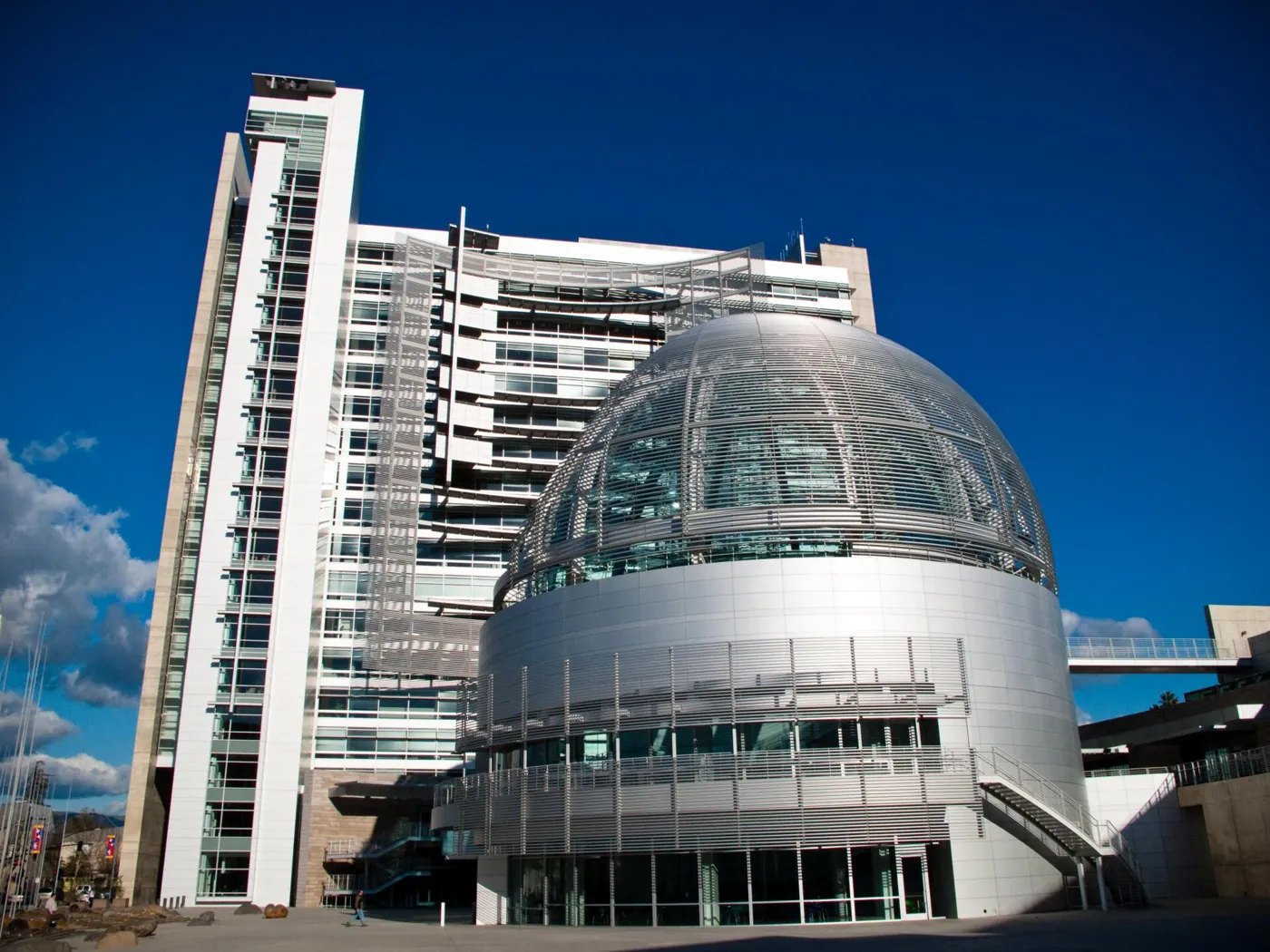
San Jose City Hall gives the route its modern finish. The building at 200 East Santa Clara Street was designed by Richard Meier and combines an 18-story office tower with a three-story wing for the city council chambers.
The standout feature is the glass rotunda and dome, which act as the visual and symbolic center of the complex. Meier describes the public plaza and curved wall as part of a larger civic space, so the building feels open and sculptural rather than closed-off.
This is where the walk shifts from old downtown architecture to a contemporary civic landmark. The building’s design uses walkways, plazas, courtyards, and fountains to create a public setting, so it makes sense to approach it as part of the street experience, not just a standalone object.
Because city hall is a public building, it can be tempting to assume interior access or guided tours. Do not make that assumption. Public architecture does not automatically mean free visitor access, and current conditions can affect how close you can walk on the sidewalks around it.
Route, duration and photo stops
Allow roughly one to two hours as a personal planning buffer if you want photo stops and pauses, rather than treating that as a measured route duration. Your pace, crossings and detours will change the timing. A shorter version can focus on the Bank of Italy Building and City Hall; adding the cathedral and theater makes the walk less direct.
If you want the clearest visual flow, start at First and Santa Clara, continue toward the Cathedral Basilica, swing by the California Theatre, and then return east to City Hall. Use public sidewalks and crossings between stops, allowing for the southward theater detour before returning toward City Hall.
Good photo moments are easy to find. The Bank of Italy Building works well for a classic vertical downtown frame, the cathedral offers a more decorative historic backdrop, and City Hall gives you strong lines, glass reflections, and a broad plaza setting.
After the walk, you can compare places to eat at San Pedro Square before choosing a meal stop.
Before you head out
Questions, answered
Is this downtown San Jose architecture walking tour self-guided?
Yes. This route is designed as a self-guided public-exterior walk, not a formal docent tour. You can move at your own pace and stop where the buildings interest you most. Just remember that current sidewalk conditions or construction may change the easiest path between stops. Details ↗
Where should I start the walk?
Start at First and Santa Clara, then head toward the Bank of Italy Building at 12 South First Street. From there, you can continue to the Cathedral Basilica of St. Joseph, the California Theatre, and San Jose City Hall. That order keeps the route easy to follow downtown. Details ↗
Can I go inside the buildings on this route?
Plan around exterior viewing rather than guaranteed entry. City offices, an active cathedral, a working theater and a privately operated historic tower have different access arrangements. Check an individual building’s visitor instructions if you want to go inside, and follow posted restrictions around any works or closed areas. Details ↗
Why include both the Bank of Italy Building and City Hall?
They show two very different chapters of San Jose architecture. The Bank of Italy Building reflects 1920s downtown commercial growth, while City Hall adds a modern civic design with a glass rotunda and 18-story tower. Seeing both on one walk makes the city’s architectural shift easy to understand. Details ↗
Is there a good place to add a show after the walk?
Yes. The California Theatre is a natural add-on because it sits right on the route and remains an active performance venue. If you want to look for a program after the walk, browse theatre performances or concert dates for citywide options. Details ↗
Sources & References
Event details and visitor information checked 2026-11-22. Check the venue's current guidance before you travel.
- Bank of Italy Building - The Skyscraper Center ↗
- San Jose City Hall | MeierArchitects ↗
- Cathedral Basilica of St. Joseph | Visit San Jose ↗
- Gonzales/Peralta Adobe - Fallon House Historic Site - History San Jose ↗
- California Theatre — Official visitor information ↗
- San Jose Civic — Official visitor information ↗


